

Updated October 2026: rewrote the article for clinicians with current trial data, FDA approvals (including the Wegovy pill, Wegovy HD and newer options such as tirzepatide and orforglipron), label-based dosing, safety and pricing, and corrected outdated claims about stopping treatment, generics and compounding.
If you're building a medical weight loss program, semaglutide is likely part of the conversation. In clinical trials it has produced substantial, clinically meaningful weight loss, and it now carries FDA-approved indications for weight management, cardiovascular risk reduction and a form of fatty liver disease. Results still depend on titration, adherence, nutrition, activity and ongoing monitoring, which is where structured tracking helps.
Obesity is common: 40.3% of US adults had obesity in the August 2021 to August 2023 national survey, and 9.4% had severe obesity (CDC NCHS).
Below we cover what semaglutide is, what the evidence shows, how it is dosed and monitored, and what newer options your patients may ask about.
What Is Semaglutide?
Semaglutide is a glucagon-like peptide-1 (GLP-1) receptor agonist. GLP-1 is a gut hormone released after eating that stimulates insulin secretion, slows gastric emptying and signals satiety to the brain.
In the US, semaglutide is sold under these brand names (Wegovy prescribing information) (Ozempic prescribing information) (Rybelsus prescribing information):
- Wegovy (weekly injection and, since December 2025, a daily tablet): approved for chronic weight management, to reduce the risk of major adverse cardiovascular events in adults with established cardiovascular disease and obesity or overweight, and (injection only) for noncirrhotic MASH with moderate to advanced fibrosis under accelerated approval.
- Ozempic (weekly injection): approved for type 2 diabetes, including cardiovascular and kidney risk reduction in specific type 2 diabetes populations.
- Rybelsus and Ozempic tablets (daily tablets, not interchangeable mg for mg): approved for type 2 diabetes, including cardiovascular risk reduction in adults with type 2 diabetes at high risk.
How Does Semaglutide Work for Weight Loss?
Semaglutide works mainly by reducing appetite and food intake. It acts on GLP-1 receptors in areas of the brain involved in appetite, and it delays gastric emptying, which helps patients feel full for longer (Wegovy prescribing information).
The weight loss is substantial in trials. In the STEP 1 trial of 1,961 adults with overweight or obesity without diabetes, semaglutide 2.4 mg weekly plus lifestyle intervention produced a mean weight loss of 14.9% at 68 weeks, compared with 2.4% with placebo. About 86% of participants on semaglutide lost at least 5% of their body weight and about half lost at least 15% (Wilding et al., NEJM 2021).
However, appetite suppression does not continue after the drug is stopped. In the STEP 1 extension, participants regained about two-thirds of their prior weight loss within one year of stopping semaglutide, and most cardiometabolic improvements moved back toward baseline (Wilding et al., 2022). Obesity behaves like a chronic disease, and most patients need ongoing treatment to maintain results.
What Are The Benefits Of Semaglutide?
The evidence supports several benefits:
- Weight Loss: a mean of 14.9% at 68 weeks with weekly 2.4 mg injections in STEP 1 (NEJM 2021), and 16.6% at 64 weeks with the 25 mg daily tablet among adherent participants in OASIS 4 (Novo Nordisk).
- Cardiovascular Risk Reduction: in the SELECT trial of adults with established cardiovascular disease and overweight or obesity without diabetes, semaglutide reduced major adverse cardiovascular events by 20% (Lincoff et al., NEJM 2023).
- Cardiometabolic Improvements: STEP 1 participants on semaglutide had greater improvements in cardiometabolic risk factors and physical functioning than those on placebo (NEJM 2021).
- Improved Blood Sugar Control: semaglutide improves glycemic control in type 2 diabetes, which is the basis of the Ozempic and Rybelsus approvals.
- Liver Health: Wegovy injection is approved for adults with noncirrhotic MASH and moderate to advanced liver fibrosis (AACE).
What Are The Side Effects Of Semaglutide?
The most common adverse reactions in the Wegovy label (incidence of 5% or more) are nausea, diarrhea, vomiting, constipation, abdominal pain, dysesthesia, headache, fatigue, dyspepsia, dizziness, abdominal distension, eructation, hypoglycemia in patients with type 2 diabetes, flatulence, gastroenteritis, gastroesophageal reflux disease and hair loss (Wegovy prescribing information).
In STEP 1, nausea and diarrhea were the most common adverse events and were typically transient and mild to moderate in severity (NEJM 2021). Clinicians should also know the label's boxed warning and key precautions:
- Boxed warning for thyroid C-cell tumors in rodents; contraindicated with a personal or family history of medullary thyroid carcinoma or MEN 2
- Acute pancreatitis and acute gallbladder disease
- Hypoglycemia when combined with insulin or an insulin secretagogue
- Acute kidney injury due to volume depletion, and severe gastrointestinal adverse reactions (not recommended in severe gastroparesis)
- Diabetic retinopathy complications in patients with type 2 diabetes, and heart rate increase
- Pulmonary aspiration during general anesthesia or deep sedation
See our guide to common GLP-1 side effects and how patients can report them. Suspected adverse reactions can be reported to the FDA through MedWatch.
How Is Semaglutide Dosed?
Wegovy injection is given subcutaneously once weekly, on the same day each week, with or without meals. It starts at 0.25 mg weekly for 4 weeks and is titrated every 4 weeks to a maintenance dose, usually 2.4 mg weekly (1.7 mg is an alternative). If a dose is not tolerated, escalation can be delayed by 4 weeks (Wegovy prescribing information) (NovoMedLink).
Wegovy HD (7.2 mg weekly) was approved in March 2026 for adults when additional weight reduction is clinically indicated. Altered skin sensation was more common at the higher dose (FDA).
Wegovy tablets start at 1.5 mg once daily for 30 days and are titrated every 30 days to 25 mg daily. They must be taken on an empty stomach in the morning with up to 4 ounces of plain water, swallowed whole, followed by a wait of at least 30 minutes before eating, drinking or taking other oral medications (Wegovy prescribing information).
When Will Patients See Results?
Weight loss is gradual and continues over many months as the dose is escalated and maintained. The headline STEP 1 results were measured at 68 weeks (NEJM 2021), so it is worth setting expectations accordingly.
To track progress, the Heads Up Semaglutide Weight Loss Dashboard brings together weight and body composition, food intake, sleep, recovery, glucose, physical activity and other objective or subjective metrics in one view. Tracking body composition and activity is especially useful for monitoring lean mass during weight loss.
If a patient is not responding as expected, review adherence, tolerability, dose and lifestyle factors, and consider whether a different dose or medication is appropriate.
How Should Patients Stop Semaglutide?
Any decision to stop should be made with the prescriber. The label advises discontinuing Wegovy when pregnancy is recognized and, for weight reduction, at least 2 months before a planned pregnancy because of semaglutide's long half-life. Patients should also tell their healthcare providers about planned surgeries or procedures because of the aspiration risk under anesthesia (Wegovy prescribing information).
What Happens After Stopping Semaglutide?
The main clinical concern after stopping is weight regain. In the STEP 1 extension, participants regained about two-thirds of the weight they had lost within a year, and improvements in blood pressure, lipids and glycemic markers largely reverted (Wilding et al., 2022). Plans for dose reduction or discontinuation should include close monitoring of weight and metabolic markers. See how and when to transition off GLP-1 medications.
How Do Patients Store Semaglutide?
Wegovy pens should be refrigerated at 36°F to 46°F and must not be frozen. They can be kept at room temperature up to 86°F for up to 28 days (NovoMedLink).
Patients should follow all instructions carefully and ask their prescriber or pharmacist if they have questions.
Is There A Generic Version Of Semaglutide?
Not in the US. Novo Nordisk lists the US compound patent for semaglutide as expiring in 2032, although Canada approved its first generic semaglutide in April 2026 (Drug Discovery and Development).
Compounded semaglutide was widely available during the national shortage. The FDA declared the shortage resolved on February 21, 2025, and its enforcement discretion for compounders ended on April 22, 2025 for 503A pharmacies and May 22, 2025 for 503B outsourcing facilities (Foley & Lardner).
What If A Patient Misses A Dose Of Semaglutide?
For the weekly Wegovy injection: if the next scheduled dose is more than 48 hours away, the missed dose should be taken as soon as possible; if it is less than 48 hours away, it should be skipped and the regular schedule resumed. After two or more consecutive missed doses, clinicians can resume as scheduled or restart the escalation schedule to reduce gastrointestinal symptoms. For the daily Wegovy tablet, the missed dose is skipped and the next dose taken the following day, never more than one tablet per day (NovoMedLink).
Patients with questions should ask their prescriber or pharmacist.
How Much Does Semaglutide Cost?
Costs depend on insurance coverage, and many plans restrict coverage for weight management. Novo Nordisk's self-pay prices, as listed in October 2026, are $349 per month for most Wegovy pen doses (with a $199 introductory price for the first two months at the starting doses, for eligible new patients), $399 for Wegovy HD 7.2 mg, and $149 to $299 per month for Wegovy tablets depending on the dose. Self-pay programs can change, so confirm current terms (NovoCare).
Which Patients Are Candidates For Semaglutide?
Wegovy is indicated, with a reduced-calorie diet and increased physical activity, for adults with obesity, adults with overweight and at least one weight-related comorbid condition, and (injection only) patients aged 12 and older with obesity. It is contraindicated with a personal or family history of medullary thyroid carcinoma or MEN 2 (Wegovy prescribing information). Prescribers will weigh each patient's weight history, comorbidities, other medications and goals.
Newer Options Patients May Ask About
- Tirzepatide (Zepbound): a dual GIP and GLP-1 receptor agonist approved for chronic weight management in November 2023 (FDA). In SURMOUNT-1, mean weight loss at 72 weeks was 15.0%, 19.5% and 20.9% with the 5, 10 and 15 mg doses, versus 3.1% with placebo (Jastreboff et al., NEJM 2022). Zepbound is also approved for moderate to severe obstructive sleep apnea in adults with obesity (Healio).
- Oral semaglutide (Wegovy pill): approved in December 2025 as the first oral GLP-1 for weight management (Novo Nordisk).
- Orforglipron (Foundayo): a once-daily, non-peptide oral GLP-1 receptor agonist approved in April 2026 that can be taken with or without food. In ATTAIN-1, participants on the highest dose lost an average of 11.1% of body weight at 72 weeks regardless of whether they completed treatment, versus 2.1% with placebo (Eli Lilly).
The Bottom Line About Semaglutide Weight Loss For Medical Providers.
Semaglutide is an FDA-approved medication for chronic weight management, available as a once-weekly injection and a once-daily tablet. It works by mimicking the hormone GLP-1, which helps regulate appetite and food intake, and it has strong trial evidence for weight loss and, in patients with established cardiovascular disease, cardiovascular risk reduction.
For many patients it is an effective option, but results depend on careful titration, management of side effects, attention to nutrition and lean mass, and a long-term plan, since weight tends to return after stopping.
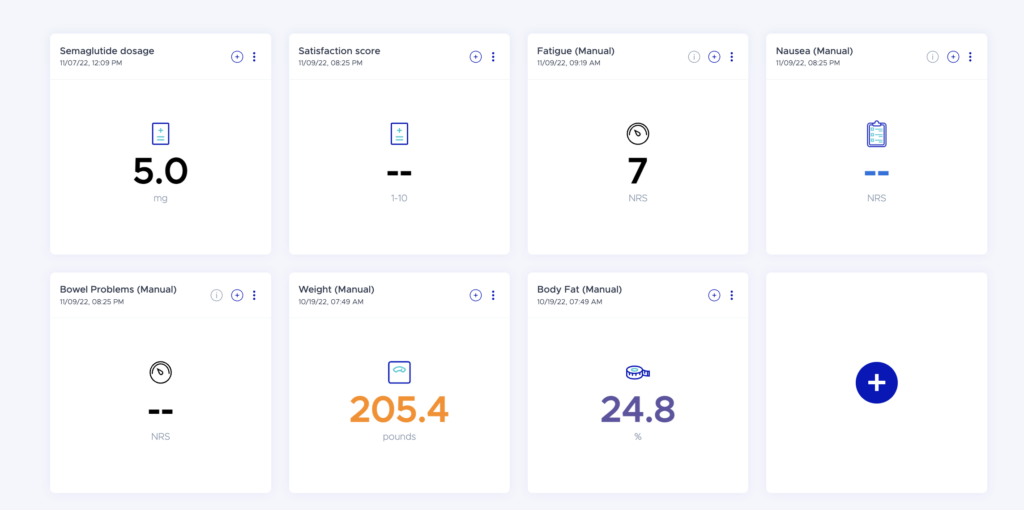
The Heads Up Semaglutide Weight Loss Dashboard helps you track patient progress and symptoms between visits. Heads Up unifies labs, wearables, medical devices and EHR data in one longitudinal patient record; threshold alerts flag readings outside your targets; and an AI copilot summarizes what changed since the last visit. This high-resolution data helps when adjusting treatment and fine-tuning each patient's plan. N=1. Learn more about GLP-1 outcomes monitoring and remote patient monitoring.
Want to see the Semaglutide Weight Loss Dashboard in action?
See how Heads Up tracks GLP-1 programs for your clients: request a demo.
See how clinics use Heads Up
Unify labs, wearables and EHR data into one AI-assisted view. Book a walkthrough tailored to your practice.


